Points on Sale This Week: What’s Worth Buying From India (and What’s a Hoarding Trap)
📅 Updated as of 28 Sep 2026
Prices use the live USD rate from our FX sheet (₹95.79 per US$, fetched 28 Sep 2026). Sales end on the dates shown — we’ll mark this post Deal Ended once they close.
DealUni is independent — not affiliated with or endorsed by any bank, airline or hotel brand named here; brand names are used only to identify the products we review. Some links may be affiliate links (disclosure).
Every few weeks my inbox turns into a Diwali sale at Sarojini Nagar. “120% bonus!” “Biggest sale of the year!” “Last chance!” — it’s always the last chance, until the next last chance three weeks later. Right now JetBlue, Finnair, Virgin, IHG, Hyatt, Wyndham, Choice and United are all selling points at the same time, and Marriott, LifeMiles and Aeroplan wrapped up their sales only days ago.
So let’s do what we always do at DealUni: convert the dollar hype into rupees, compare it with what the points are actually worth to an Indian traveller, and give you a straight answer. Spoiler — the answer for most people is “buy only what you need for a booking you’ve already found.”
TL;DR
- Hotel points are the only cheap ones this week: IHG (₹0.49), Wyndham (₹0.67) and Choice (₹0.71) sit inside our fair-value range — fine for topping up a specific award night.
- Airline miles are pricey: Finnair Avios (₹1.38 if you pay in Japanese yen — euro costs ~13% more) and Virgin (₹1.18–1.45) only make sense to close a small gap on a booking you’ve already found.
- United (₹1.84), American (₹2.22) and JetBlue (₹1.44): skip. You’d be paying more than the miles are worth.
- Points lose value every year — Emirates, Axis and Club ITC all devalued in 2026 alone. Hoarding bought points is how you convert rupees into regret.
- Which card you pay with matters as much as the sale: Axis Magnus for Burgundy and HSBC Premier come out ahead; Amex Platinum Charge’s 3.5% markup eats most of its 3X overseas points.
- Not urgent? Wait. The Black Friday / year-end window usually brings offers as good as or better than these.
What’s On Sale Right Now (28 Sep 2026)
“₹/pt” is the best-tier price converted at ₹95.79 per US$, plus the 2% forex markup and 18% GST on it that an HDFC Infinia or Diners Black charges (about 2.4% all-in). On a card with 3.5% markup, add roughly another 2%. “Our value” is what these points are typically worth for Indian redemptions, from our Program Values sheet.
These prices are for the top bonus tier. Finnair’s 50% only kicks in at 1,00,000+ Avios; JetBlue’s 120% needs 20,000+; Virgin’s best rate needs the biggest purchase. Buy a small top-up and your per-point cost can be noticeably higher. That’s not an accident — the tiers are designed to turn a 5,000-point top-up into a 1-lakh-point impulse buy.
The Finnair Hack: Pay in Japanese Yen, Not Euro
Here’s the trick most people miss. Finnair lets you pick the currency on its buy-Avios page, and the prices aren’t the same in every currency. Yen is the cheapest, euro the dearest — for the exact same Avios. It’s like the same mango costing different amounts depending on which language you ask in.
Here’s the maximum buy (2,00,000 Avios + 1,00,000 bonus = 3,00,000 Avios), converted at today’s rates from our FX sheet (¥1 = ₹0.608, €1 = ₹109.29, US$1 = ₹95.79), before card charges:
Paying in yen saves about ₹10,300 vs dollars and ₹53,600 vs euro on the top tier. At the 90,000-Avios tier (1,35,000 with bonus), yen is ¥3,14,370 (₹1,91,140, about ₹1.42 per Avios) against €1,980 (₹2,16,393, about ₹1.60) — roughly ₹25,000 saved just by switching the currency dropdown.
Currency pricing can change during a sale, and at smaller tiers the gap between yen and dollars narrows. Toggle between ¥, $ and € on Finnair’s page and pick the cheapest before you pay — it takes ten seconds. Your card’s forex markup applies whichever currency you choose, so that part doesn’t change.
Which Card Should You Pay With?
Every one of these purchases is a foreign-currency charge. So the real price is the sale price, plus your card’s forex markup (and 18% GST on that markup), minus the reward points the spend earns. Here’s what ₹1,00,000 of points-buying really costs on the four cards our readers ask about most, valuing airline miles at a conservative ₹1 each:
Magnus for Burgundy is the runaway winner if the purchase takes your month past ₹1.5L — above that line it earns 35 EDGE points per ₹200. Example: the full 3,00,000-Avios buy in yen (≈ ₹4,05,421) on a fresh month earns about 53,700 EDGE points (₹1.5L at 12 per ₹200, the rest at 35) → roughly 43,000 partner miles. That brings the effective cost down to around ₹1.24 per Avios. (Only do this if you genuinely need that many Avios — we’re not endorsing a ₹4-lakh hoard.)
HSBC Premier is the steady pick for smaller top-ups: the lowest markup of the four and 1:1 transfers to airlines. HSBC ran a zero-forex offer on all its cards from 15 August to 15 September 2026 — that has ended, so Premier is back to 0.99%. If HSBC repeats it, Premier becomes the clear winner for every size of purchase.
HDFC Infinia is fine — you come out slightly ahead. Amex Platinum Charge earns 3X on overseas spends, but its 3.5% markup eats almost all of it; use it only if you need MR for a Marriott or Virgin transfer anyway.
Net effective cost per point, after card rewards
You’re getting points back on the spend itself, so the sticker price overstates what you really pay. This table takes each sale’s best-tier price, adds your card’s forex markup + GST, and subtracts the points the spend earns (valued at ₹1 each). This is the number to compare against our “value” column above.
Key: M4B = Axis Magnus for Burgundy, with the spend landing above (↑) or below (↓) ₹1.5L that statement month · HSBC = HSBC Premier · Infinia = HDFC Infinia · Amex = Amex Platinum Charge (MR → KrisFlyer)
How to read it: Finnair Avios bought in yen fall from ₹1.35 on the sticker to about ₹1.19 when the whole purchase lands above your ₹1.5L Magnus line. That’s the cheapest Avios we’ve seen from India this year. On every other card, the rewards roughly cancel the forex markup, so the net cost stays within a couple of paise of the sticker price. If you’re nowhere near ₹1.5L this month, don’t bend your spending to get there. The extra points aren’t worth buying things you don’t need.
Points purchases are often processed by a third-party seller, and banks can code these merchants differently. Check your card’s exclusion list (gift cards, wallet loads, “quasi-cash”) before a big buy, and remember Axis caps yearly transfers (Burgundy: 2L to Group A, 8L to Group B). Compare all 30+ cards in our Rewards Toolkit.
Just Missed: Marriott, LifeMiles, Aeroplan, Hilton
If you’re kicking yourself — don’t. Here’s what just ended:
LifeMiles alone ran big sales in March, August and September this year. These promos come back like Monday mornings — reliably, and usually when you least need them. Our older breakdowns still show how to judge each one: Marriott, LifeMiles, Aeroplan.
The Golden Rule: Top Up, Don’t Hoard
Buying points to keep “for later” is like stocking up on tomatoes when they hit ₹20 a kilo. Great price — until they go bad in your fridge. Points don’t earn interest. They don’t go up in value. They only go one way.
2026 alone: Emirates Skywards cut value around 15%, Axis gutted its transfer ratios, Club ITC slashed Marriott transfers, and Hilton reshuffled its tiers. Airlines call it “recalibrating the award chart”. The rest of us call it daylight robbery with a press release.
₹1 lakh parked in a sweep FD at least earns interest while you plan the trip. ₹1 lakh of bought miles earns you… anxiety, mostly. Buy when you’re ready to book — not before.
Black Friday and year-end usually bring offers as good as or better than this week’s. If you don’t have a specific award in mind, wait. Our Black Friday playbook is the checklist for that window.
These are dollar charges on an Indian card: forex markup plus GST on it, and some programs sell through a third-party processor. Also, bought points often don’t count for status. More on the risks of buying (and selling) points in this post.
Top-Up Maths: When Buying Actually Wins
Here’s the right way to use a sale: you’ve already found award space, you’re a little short, and buying the gap is cheaper than paying cash. Three examples using award prices from our DealUni sheet:

That’s the InterContinental Bali in Jimbaran — the kind of IHG resort where a small top-up can make sense. If you’re dreaming of Bali, our 150K Points Challenge: Bali & Beyond maps out the whole trip. And the beach is two minutes away:

Program by Program: Our Honest Take
IHG (₹0.49): the most useful sale this week for Indian travellers, with IHG hotels across India, the Gulf and Southeast Asia. Our Oman 150K Challenge shows how IHG fits into a real trip.
Wyndham (₹0.67) and Choice (₹0.71): fine value, few properties in India. Buy only for a specific night — see our older Wyndham and Choice breakdowns for how their award charts work.
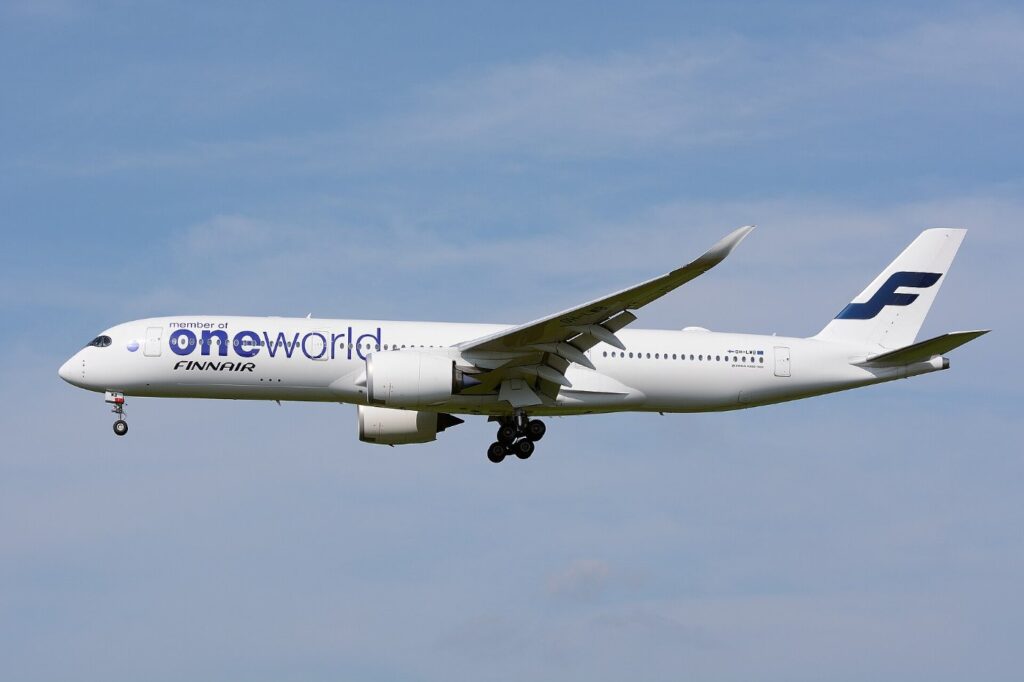
Finnair Avios (₹1.42): above our ₹0.80–1.30 value, so it’s top-up only. The trick is that Finnair Avios can be moved to Qatar Privilege Club and British Airways, which opens up short-haul Qatar and oneworld awards. Pay in yen (see the currency table above), and our last Finnair sale review covers the mechanics.
Virgin (₹1.18–1.45): sits right inside our value range, but only the big tiers get you the low end. Great for closing a gap on a London redemption — our Europe 15-day plan shows how Amex points and Virgin fit together. Also see our Virgin Red sale analysis.
Hyatt (₹2.04): at the very top of what Hyatt points are worth. Only for a Category 7–8 top-up in peak season — we ran the numbers in our Hyatt buy-points post.
United (₹1.84) and American (₹2.22): no. You’d pay nearly double what the miles are worth. United also caps purchases at 50,000 miles per 90 days. See our earlier United analysis.
JetBlue (₹1.44): JetBlue points are worth roughly a fixed amount on JetBlue fares, so there’s no sweet spot to exploit. Unless you’re flying JetBlue inside the US — or booking Qatar Airways between the US and India — skip. We broke that one exception down in our JetBlue TrueBlue 120% bonus post. Saudia AlFursan is similar — niche for most Indians.
Should You Buy? Quick Decision Table
Before you buy, check whether your cards can transfer to that program instead. The DealUni Rewards Toolkit shows every transfer partner and ratio for 30+ Indian cards, estimates miles for your spend, and the Trip Finder suggests where your existing points go furthest. Most of the time, the answer is “you don’t need to buy anything”.
FAQ
Buy the gap, not the dream
This week’s only genuinely cheap points are hotel points — IHG, Wyndham and Choice — and even those make sense only for a night you’ve already picked. Finnair Avios (paid in yen) and Virgin are fine for closing a small gap on a flight you’ve already found. United, American and JetBlue: skip. And if you’re not booking in the next few weeks, keep your rupees. Pay with Magnus for Burgundy or HSBC Premier, not your Amex. Points melt; cash waits patiently for Black Friday.
Related reads: Why buying or selling points can cost you · Black Friday guide for points collectors · 150K Challenge: Maldives · 150K Challenge: Japan · 150K Challenge: Round the World · KrisFlyer Spontaneous Escapes (October)
Prices checked on 26–28 Sep 2026 on each program’s official buy-points page. HSBC zero-forex offer as reported by Business Today. Card earn rates, forex markups and award prices are from the DealUni card and award sheets. Some offers are targeted, so check your own account’s price before buying and always confirm live availability.